
Quick Summary:
Social platforms are no longer just places for content consumption and audience interaction. They have evolved into buying environments where discovery, trust, and purchasing happen within the same scroll. Social commerce is reshaping digital buying behavior by reducing friction, shortening decision cycles, and turning engagement into measurable sales opportunities for businesses of every size.
A growing number of consumers no longer begin their buying journey on search engines. Instead, product discovery now happens while watching short-form videos, browsing creator recommendations, reading comments, or saving posts for later. That shift has changed the role of digital engagement entirely.
A “like” used to be treated as a vanity metric. Now it signals buying intent.
This is the real force behind social commerce. It transforms attention into action without forcing users to leave the platform where interest was created in the first place. The experience feels less like traditional advertising and more like digital word-of-mouth happening in real time.
What makes this transition especially powerful is the emotional context behind purchases. People are not simply searching for products anymore. They are reacting to demonstrations, authenticity, relatability, and community validation.
The Shorter Path Between Discovery and Purchase
Traditional online shopping often involved multiple steps:
- Discovering a product through an ad
- Searching for reviews elsewhere
- Visiting external websites
- Comparing prices across tabs
- Returning later to complete a purchase
That process created friction at every stage.
Social commerce compresses those steps into a single behavioral flow. A consumer watches a product being used, reads reactions instantly, views user-generated content, and makes a purchase decision within minutes.
This streamlined path works because modern users value convenience as much as pricing. Reducing mental effort has become a major conversion factor.
The rise of vertical video also accelerated this shift. Quick demonstrations communicate usefulness faster than long product descriptions ever could. Instead of selling features directly, visual content sells outcomes, lifestyle alignment, and emotional relevance.
Engagement Has Become a Trust Signal
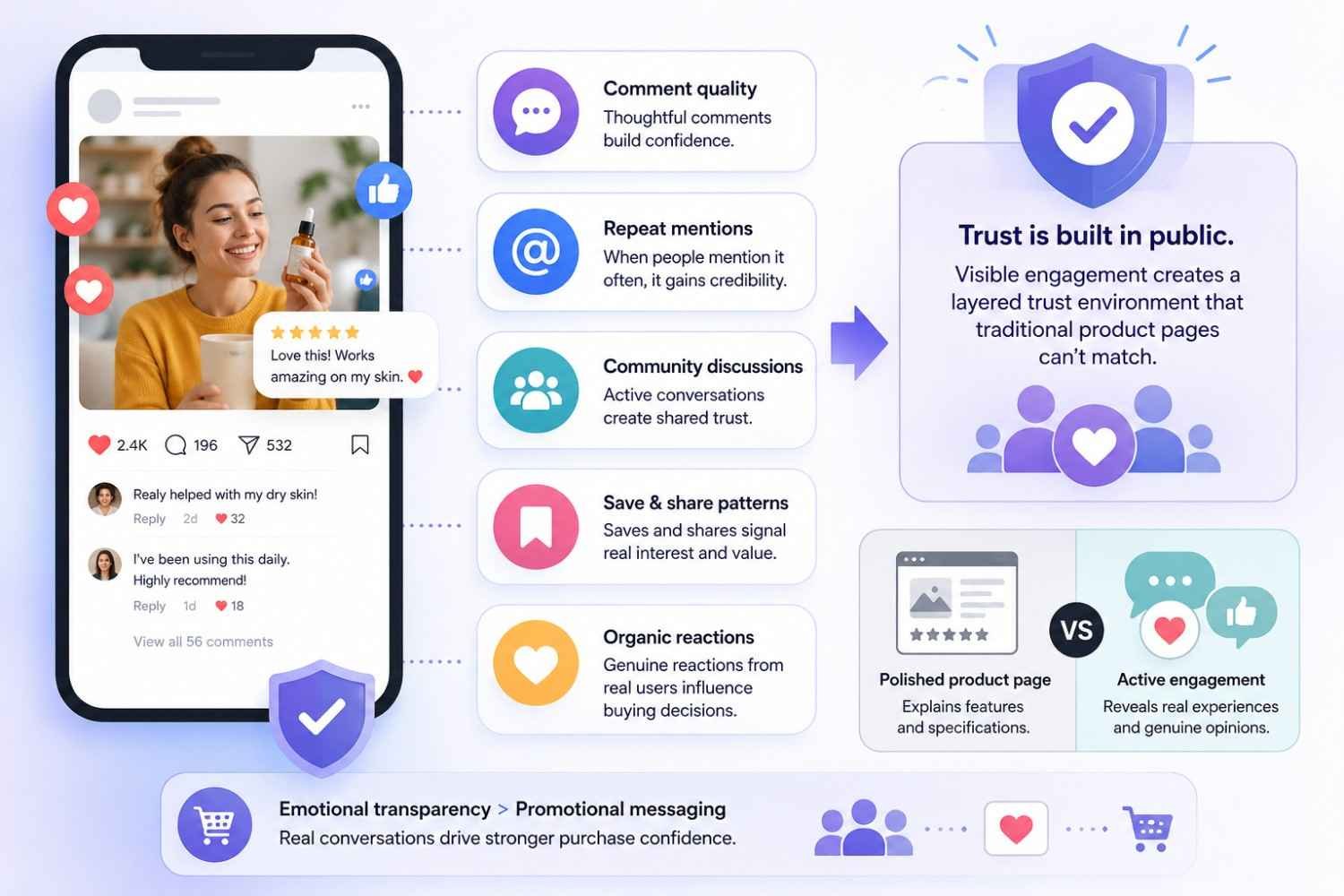
One major gap in many discussions around social media shopping is the role of visible interaction as a form of social proof.
Consumers increasingly evaluate products through audience behavior:
- Comment quality
- Repeat mentions
- Community discussions
- Save and share patterns
- Organic reactions from existing buyers
This creates a layered trust environment that traditional ecommerce pages struggle to replicate.
A polished product page may explain specifications, but active engagement reveals how people genuinely feel. That emotional transparency influences purchase confidence more than aggressive promotional messaging.
Interestingly, audiences also recognize overly manufactured engagement quickly. Forced virality often produces the opposite effect. Buyers are becoming more skilled at identifying authenticity gaps, especially among younger demographics who spend hours consuming social content daily.
That is why relatable storytelling now outperforms polished perfection in many social commerce campaigns.
Content Formats That Quietly Drive Conversions
Not every high-performing sales post looks promotional.
Some of the strongest conversion drivers are subtle content formats that feel educational or entertaining first. Audiences respond more naturally when products appear within useful experiences instead of direct selling environments.
Several formats consistently influence buyer behavior:
Problem-solving videos
Content addressing everyday frustrations often creates immediate product relevance.
Comparison-based content
Users enjoy evaluating differences before purchasing, especially when information feels unbiased.
Behind-the-scenes content
Transparency increases credibility and strengthens emotional connection.
Community participation
Challenges, reactions, and user responses create a sense of involvement instead of passive viewing.
This evolution explains why social media shopping succeeds best when content prioritizes audience value before transaction intent.
Algorithms Reward Buying Behavior Differently
Another overlooked aspect of social commerce is how platform algorithms increasingly recognize purchase-focused engagement.
Content that generates:
- Longer watch time
- Saves
- Shares
- Product clicks
- Comment discussions
Often receives wider visibility because these actions indicate deeper audience interest.
This creates a compounding effect. Strong engagement boosts reach, broader reach increases discovery, and higher discovery improves conversion potential.
The result is a commerce ecosystem where audience interaction directly influences product visibility.
That dynamic has also shifted content strategy priorities. Brands and creators can no longer rely solely on polished visuals. Retention patterns, storytelling structure, and audience psychology now matter equally.
The Emotional Side of Digital Buying
Many buying decisions inside social commerce environments are emotionally accelerated.
Traditional e-commerce encouraged rational comparison. Social platforms encourage emotional immediacy.
A user scrolling late at night may encounter:
- A relatable product experience
- A transformation story
- A satisfying demonstration
- A recommendation from someone relatable
That emotional timing matters.
People often purchase because content reduces uncertainty while increasing personal connection. The product begins to feel familiar before the buyer even visits a checkout page.
This explains why emotional resonance frequently outperforms aggressive discount strategies in social media shopping environments.
Consumers are not simply buying products. They are buying confidence, convenience, identity alignment, or participation in a trend.
What Businesses Often Misunderstand
A common mistake is treating social commerce like a direct extension of traditional advertising.
That approach usually fails because users behave differently on social platforms. They expect conversation, entertainment, and authenticity before sales messaging appears.
Highly promotional content often interrupts the browsing experience instead of blending into it naturally.
Successful strategies usually focus on:
- Native storytelling
- Audience interaction
- Consistent publishing rhythm
- Community responsiveness
- Educational micro-content
The strongest-performing content rarely feels desperate to sell.
Another major mistake is ignoring post-purchase engagement. Buyers who share experiences publicly often influence future customers more effectively than formal campaigns ever could.
That makes customer participation one of the most valuable growth assets within social commerce ecosystems.
Where Consumer Behavior Is Headed Next
The future of social commerce will likely revolve around increasingly immersive buying experiences.
Consumers are becoming comfortable making purchases directly inside content feeds rather than navigating separate shopping journeys. As platforms continue reducing friction, the distinction between entertainment and ecommerce will become even thinner.
At the same time, audience expectations will rise.
People will expect:
- Faster response times
- Authentic creator relationships
- Transparent product demonstrations
- Interactive shopping experiences
- Community-driven validation
Brands that focus only on visibility without building trust may struggle to maintain long-term conversions.
The deeper opportunity lies in understanding why people engage before they buy. Attention alone no longer guarantees sales. Emotional relevance, credibility, and seamless experiences now shape digital purchasing behavior more than traditional advertising pressure ever did.
That shift is precisely why social commerce has moved beyond trend status and become a permanent transformation in how modern consumers discover, evaluate, and purchase online.