
Quick Answer:
Authenticity has become one of the most influential forces in digital marketing, and that is exactly why user-created experiences now outperform polished promotional campaigns across many platforms. Audiences trust real opinions, honest reviews, community conversations, and relatable experiences more than highly controlled messaging. Businesses that strategically use customer-driven content gain stronger engagement, better visibility, higher trust, and deeper long-term audience relationships.
Scrolling through social media has become an exercise in filtering out exaggeration.
Consumers recognize staged marketing instantly. Perfectly polished ads, scripted captions, and heavily edited visuals no longer create the same emotional impact they once did. Instead, audiences pause when they encounter something that feels real: a genuine experience, an unfiltered review, or an honest recommendation from another person.
That shift has fundamentally changed digital marketing.
The growing influence of user-generated content is not simply a trend tied to social media culture. It reflects a deeper change in how people evaluate trust, credibility, and purchasing decisions online.
Businesses that understand this shift are building stronger audience loyalty while many competitors continue relying on outdated promotional approaches.
Authenticity Has Become a Competitive Advantage
Consumers have become significantly more cautious about marketing claims.
Years of overly polished advertising have created skepticism across digital platforms. Audiences now look for signals that feel human, unscripted, and believable before engaging with a business.
This explains why user-generated content has gained such enormous value in recent years.
Real customer experiences naturally create emotional credibility because they are perceived as independent rather than carefully engineered. A simple customer review, product demonstration, or personal story often influences buying decisions more effectively than expensive advertising campaigns.
Authenticity now drives visibility, engagement, and trust simultaneously.
Social Platforms Are Rewarding Community-Driven Content
Platform algorithms increasingly prioritize interaction and relatability over corporate-style promotion.
Content that sparks conversation, saves, shares, comments, and genuine engagement receives stronger visibility. As a result, many social platforms now push authentic community content further than heavily branded campaigns.
This algorithmic shift has changed how businesses approach digital growth.
Short-form customer videos, conversational reviews, audience discussions, and community participation now generate substantial organic reach. Businesses using user-generated content effectively often experience stronger audience interaction because the material feels naturally integrated into social behavior instead of interrupting it.
The result is more sustainable visibility without relying entirely on paid promotion.
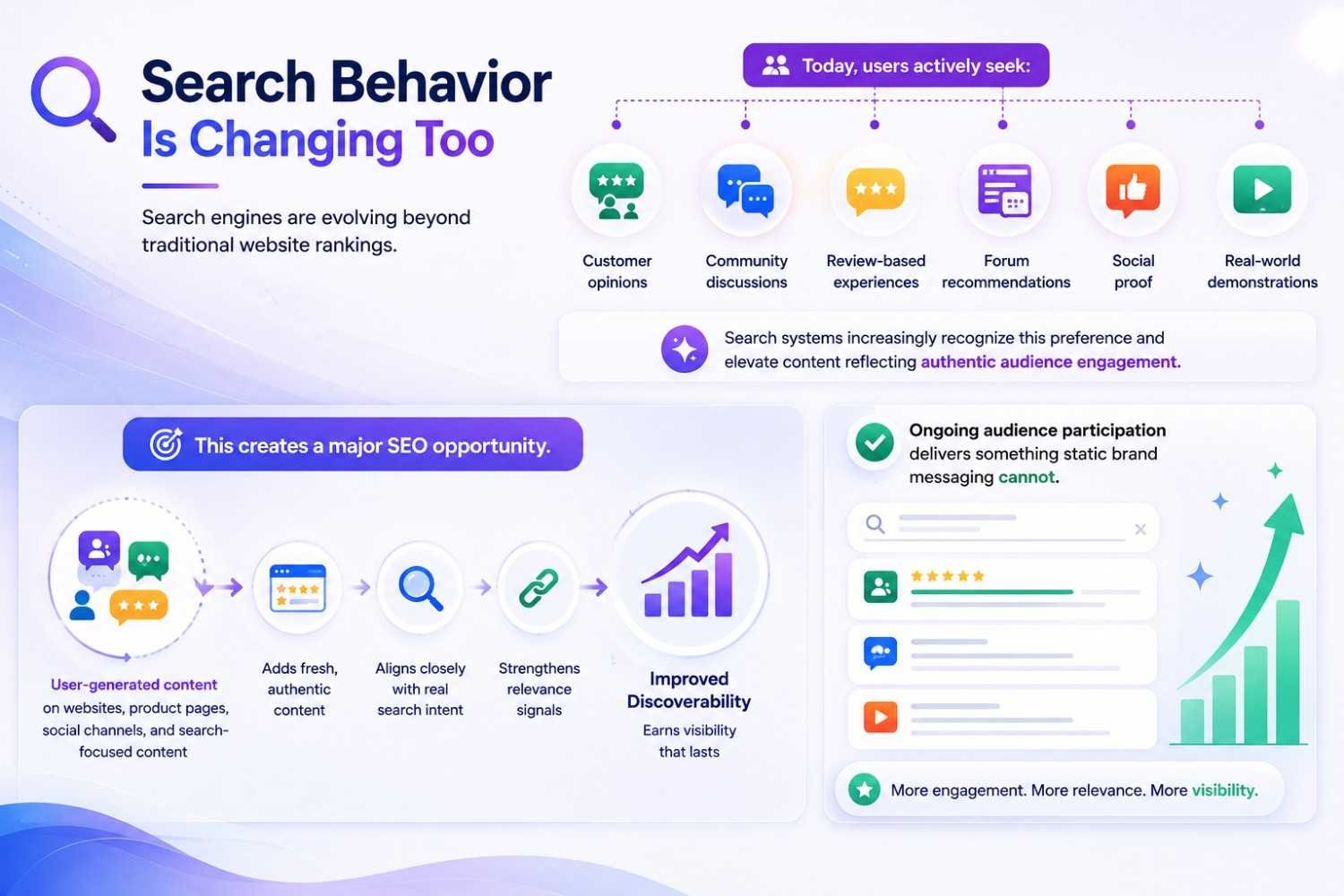
Search Behavior Is Changing Too
Search engines are evolving beyond traditional website rankings.
Today, users actively seek:
- Customer opinions
- Community discussions
- Review-based experiences
- Forum recommendations
- Social proof
- Real-world demonstrations
Search systems increasingly recognize this preference and elevate content reflecting authentic audience engagement.
This creates a major SEO opportunity.
Businesses integrating user-generated content into websites, product pages, social channels, and search-focused content often strengthen relevance signals naturally. Reviews, customer questions, shared experiences, and discussion-based content continuously add fresh material that aligns closely with real search intent.
That ongoing stream of audience participation improves discoverability in ways static brand messaging cannot easily replicate.
Trust Is Now Built Collectively
Traditional marketing relied heavily on one-way communication.
Modern audiences expect participation.
Consumers no longer want businesses to simply tell stories about themselves. They want evidence from other customers, communities, and independent experiences before making decisions.
This is why user-generated content plays such a powerful role across the buyer journey.
A potential customer may trust dozens of small audience interactions more than a professionally written campaign because collective validation feels more reliable than self-promotion.
That community-driven trust influences:
- Purchase confidence
- Brand perception
- Audience retention
- Repeat engagement
- Long-term loyalty
Businesses ignoring this behavioral shift risk appearing disconnected from how modern consumers actually evaluate credibility online.
Long-Form Community Content Is Quietly Returning
Short-form content still dominates visibility, but audiences increasingly seek depth before making decisions.
People now spend time reading:
- Detailed customer reviews
- Discussion threads
- Long-form experience posts
- Community recommendations
- Tutorial-style walkthroughs
This return to deeper engagement reveals something important: audiences want context, not just promotion.
Businesses leveraging user-generated content within longer educational or discussion-based formats often build stronger trust because audiences can evaluate nuanced experiences instead of surface-level claims.
The combination of authenticity and detail creates far more persuasive digital experiences.
AI Is Expanding UGC Opportunities
Artificial intelligence is changing how businesses organize and scale customer-driven content.
AI tools can now help:
- Categorize audience feedback
- Identify recurring customer themes
- Surface high-performing content
- Translate multilingual discussions
- Improve discoverability
- Optimize distribution
However, authenticity remains critical.
Audiences quickly detect when content becomes overly manufactured or artificially manipulated. The businesses benefiting most from AI-assisted workflows are those using technology to organize genuine audience experiences rather than fabricate them.
This balance between automation and authenticity is becoming increasingly important as digital content volume continues to expand rapidly.
Moderation Matters More Than Most Businesses Realize
Many discussions around UGC focus only on visibility and engagement while ignoring moderation challenges.
Without proper oversight, businesses risk:
- Spam
- Copyright problems
- Harmful discussions
- Misinformation
- Reputation damage
Effective moderation protects authenticity without over-controlling community participation.
Strong moderation strategies usually include:
- Clear content guidelines
- Transparent review processes
- Balanced human oversight
- AI-assisted filtering
- Consistent community standards
Businesses that manage user-generated content responsibly create safer, more trustworthy environments that encourage stronger long-term audience participation.
The Smartest Brands Are Building Participation Ecosystems
One major gap in many marketing discussions involves sustainability.
The most effective businesses are not chasing isolated viral moments. They are creating systems that continuously encourage participation.
This often includes:
- Interactive campaigns
- Community discussions
- Customer showcases
- Experience-sharing opportunities
- Participation incentives
- Social engagement loops
When audiences feel recognized and involved, content creation becomes ongoing rather than occasional.
That continuous flow of authentic audience participation creates a compounding visibility advantage across social media, search engines, and AI-driven discovery systems.
Visibility Now Depends on Human Signals
Digital marketing is moving toward environments where trust, relatability, and community engagement strongly influence visibility.
Search engines, AI systems, and social platforms increasingly prioritize signals reflecting genuine audience interaction rather than polished promotional messaging alone.
Businesses using user-generated content strategically are not simply collecting reviews or reposting customer photos. They are building ecosystems of trust that influence discovery, engagement, and conversion across the entire digital landscape.