
Quick Summary
Getting featured in AI-generated answers requires more than traditional SEO. To appear in AI-powered search experiences, content must be structured clearly, answer questions directly, demonstrate authority, and provide machine-readable context through technical enhancements like schema markup. Well-formatted content and structured data can significantly improve AI citation visibility, with some industry reporting noting citation gains from schema implementation. Businesses that adapt early are more likely to secure visibility as search behavior continues shifting toward AI-driven responses.
A growing number of users no longer click through ten blue links when searching online. Instead, they type a question and expect an instant, polished response from an AI-generated summary. That shift is quietly changing the rules of digital visibility. If a website is not referenced in those generated answers, it risks becoming invisible even while still ranking in traditional search.
This is exactly why AEO optimization has become one of the most important strategic priorities in modern content marketing. The focus is no longer just about ranking on a search page. It is about becoming the source AI systems trust enough to quote.
Search Behavior Is Moving Toward Direct Answers
People increasingly search in a conversational way. Rather than typing fragmented keywords, they now ask complete questions such as:
- “What is the best way to improve local SEO?”
- “How can small businesses lower customer churn?”
- “What tools help automate reporting?”
AI-powered platforms are designed to respond to those queries with direct, summarized answers. Because of this, brands hoping to rank for AEO must start creating content that mirrors the way real people ask questions.
Traditional ranking strategies alone no longer cover the full search landscape. AI systems prioritize content that answers quickly, clearly, and confidently.
Structure Content for Extraction, Not Just Reading
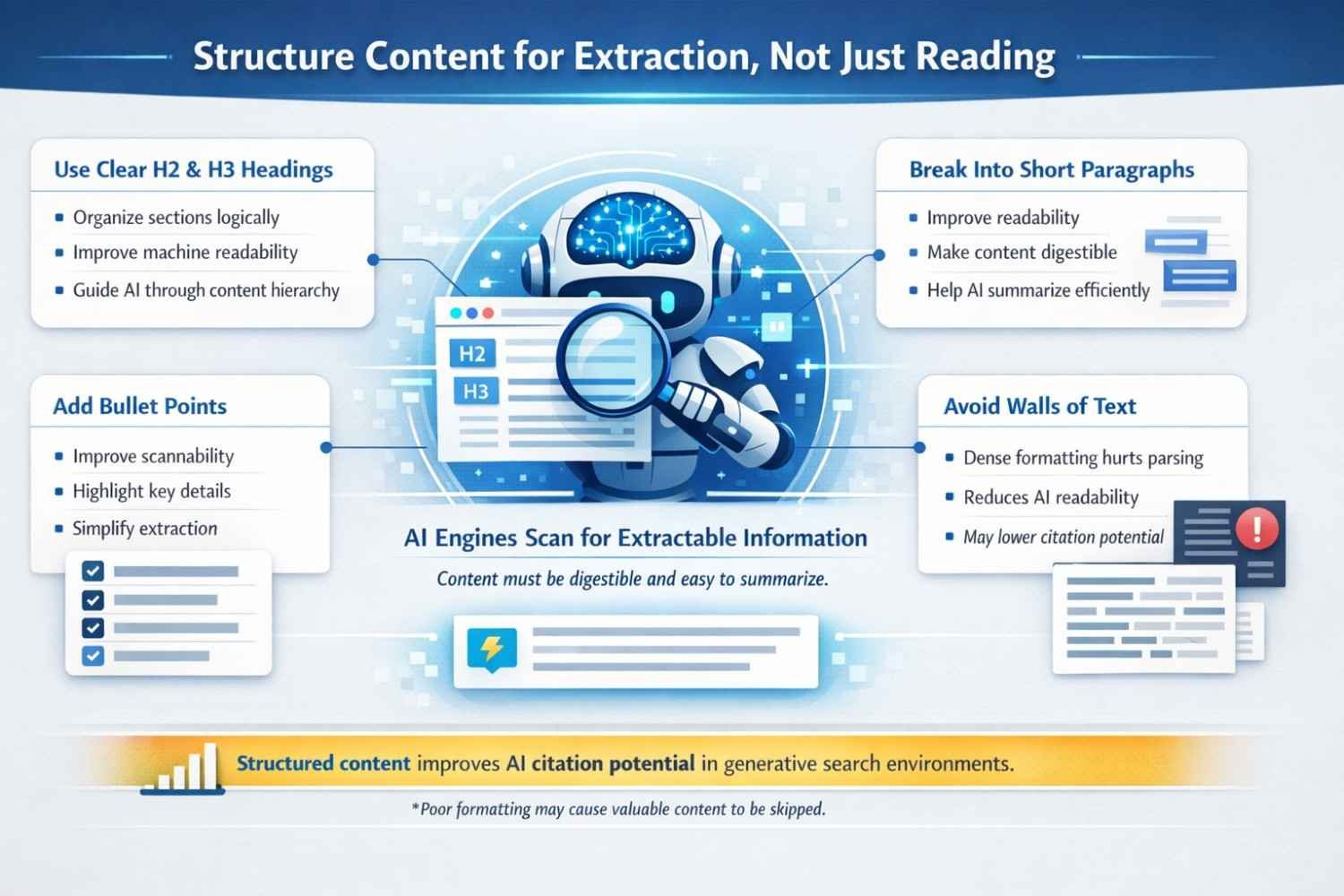
AI engines do not interpret content exactly the way humans do. They scan pages for extractable, digestible information that can easily be summarized.
To improve AEO optimization, structure content so it is easy for machines to parse:
- Use clear H2 and H3 headings
- Break explanations into short paragraphs
- Add bullet points where helpful
- Include direct answers immediately below headings
- Avoid walls of text
Structured content has shown measurable influence on citation behavior in generative search environments, with research indicating that content architecture can improve citation rates notably when engineered properly.
When formatting is chaotic, AI engines may skip the content even if the information itself is valuable.
Lead with Direct Answers Early
One of the biggest mistakes publishers make is burying the answer too deep into the page.
AI systems favor content that addresses the user’s question quickly. This means each article should ideally:
- Present a concise answer near the top
- Follow with an expanded explanation afterward
- Avoid unnecessary buildup before delivering value
This is why many pages now include short answer summaries near the beginning. It aligns naturally with how answer engines retrieve and summarize information.
A strong AEO optimization strategy often starts with writing for the answer first, then elaborating after.
Build Authority Through Specificity and Depth
Generic advice rarely gets cited by AI engines. Broad, surface-level content may rank poorly in answer systems because it lacks informational depth.
AI engines often prefer sources that:
- Offer specific steps instead of vague guidance
- Include examples and nuanced explanations
- Cover subtopics comprehensively
- Demonstrate expertise through depth
If two articles discuss the same topic, the more detailed and practically useful one is more likely to rank for AEO because it provides a richer context for summarization.
Thin content is becoming less competitive in AI-driven search environments.
Use Schema Markup to Clarify Meaning
Schema markup helps search, and AI systems interpret content with greater accuracy by labeling page elements and their purpose.
Effective schema types may include:
- Article schema
- FAQ schema
- How-to schema
- Review schema
Industry guidance consistently notes schema as a core factor in making content “answer-ready” for AI-powered systems.
When applied correctly, schema strengthens AEO optimization by giving machines structured signals about what the content contains and how it should be interpreted.
Target Conversational Queries, Not Just Keywords
Traditional keyword targeting focused heavily on short phrases. AEO requires broader thinking.
Instead of only optimizing for:
- “Email marketing software”
Also target:
- “What is the best email marketing software for beginners?”
- “How does email marketing software improve conversions?”
This shift matters because AI search is driven by natural-language prompts. Brands trying to rank for AEO need to align content strategy with conversational user behavior, not outdated keyword-only patterns.
Researching “People Also Ask” questions, forums, and prompt-based search suggestions can help uncover these opportunities.
Strengthen Off-Page Trust Signals
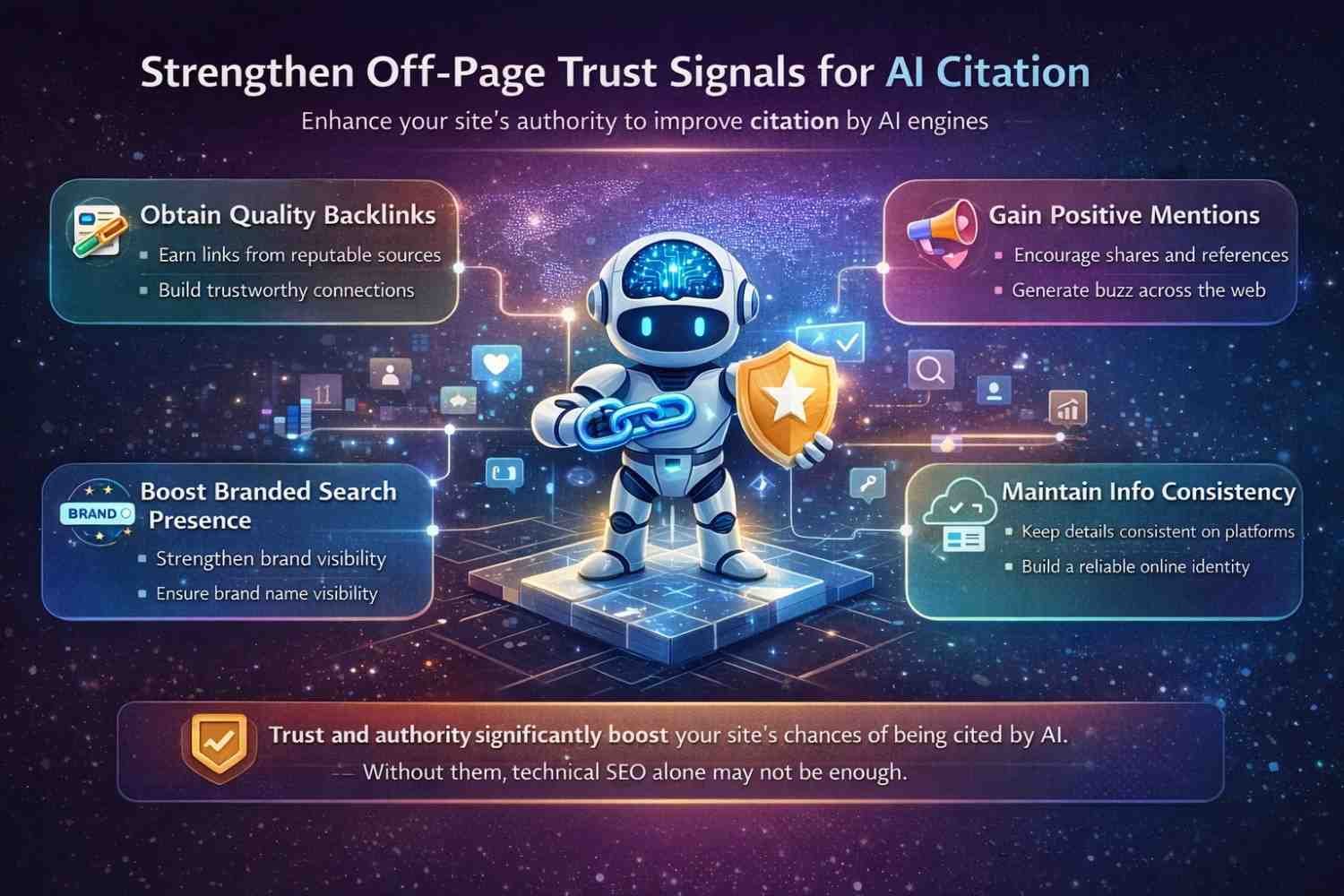
AI-generated answers often rely on trust and authority signals when choosing what to cite.
Strong trust indicators include:
- Quality backlinks from reputable sources
- Positive mentions across the web
- Strong branded search presence
- Consistent information across platforms
A page may be technically optimized, but without credibility signals, it may still struggle in AEO optimization because trust heavily influences whether AI systems deem a source reliable enough to quote.
Authority is becoming as critical as formatting.
Keep Content Fresh and Updated
AI systems increasingly value freshness, especially in industries where information changes rapidly.
Updating content regularly helps maintain visibility by:
- Keeping facts current
- Reflecting new trends and developments
- Improving metadata freshness signals
Recent research suggests freshness and metadata are among the strongest associations linked to citation probability in AI-mediated search.
A stale page may lose visibility even if it was once strong. Maintaining freshness is essential if the goal is long-term AEO optimization success.
Write in a Quotable, Citation-Friendly Style
AI-generated summaries often pull short, self-contained chunks from source material.
That means your writing should include:
- Clear, standalone insights
- Concise definitions
- Memorable summary statements
- Highly quotable explanations
For example, instead of writing:
“Content can help businesses improve performance in a variety of ways depending on implementation.”
A more citation-friendly version would be:
“High-quality content improves visibility, builds trust, and supports conversion when aligned with user intent.”
The second version is far easier for AI systems to extract and cite. Businesses trying to rank for AEO benefit greatly from writing in this format.
Monitor What AI Engines Already Cite
A smart strategy often involves studying current AI-generated results.
Ask target questions across multiple platforms and observe:
- Which sites get cited repeatedly
- How their content is structured
- What tone they use
- How deeply they explain topics
Reverse engineering those patterns can reveal what answer engines prefer. Effective AEO optimization often comes from identifying citation trends and adapting content accordingly.
Visibility in Search Is Being Redefined
The rise of AI-generated answers is changing how online authority is earned. Traditional rankings still matter, but they are no longer the only measure of discoverability. Increasingly, the brands gaining visibility are the ones whose content can be understood, trusted, and extracted instantly by AI systems.
Success in this environment comes from combining structure, clarity, authority, and technical optimization into one cohesive strategy. Businesses that master AEO optimization early will not simply rank higher. They will become the answers users see first.
As search continues evolving toward AI-led experiences, the real competitive advantage will belong to those whose content is not just found, but chosen.